Showing posts with label verse. Show all posts

Friday, August 21, 2020

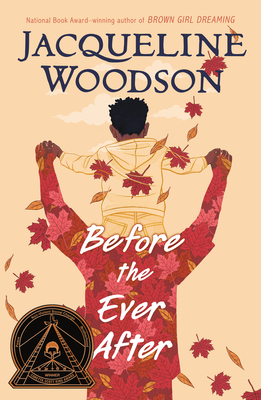
Before the Ever After

Support Independent Bookstores - Visit IndieBound.org

Before the Ever After by Jacqueline Woodson. Grades 4-7. 176 pages. Nancy Paulsen Books, September 2020. Review copy provided by publisher. 

ZJ's dad has always been his hero. In fact, he's been a lot of people's hero. ZJ's dad is a pro football star, playing on TV every week and well known to everyone ZJ knows. But lately, ZJ's dad hasn't been himself. His head hurts, sometimes so badly that he can't do anything else. He forgets things, including his own son sometimes. And he hasn't been able to play football, his very favorite thing, for awhile. ZJ copes by making music - composing songs that help him express his feelings - and by leaning on his best buds, boys who remember how ZJ's dad was before. Before his injuries started taking their toll. ZJ has hope that things will be okay one day, that there will be a happily ever after. But what's he supposed to do in the meantime, before the ever after? 

This is a special book. And you know I say that having served on the Newbery Committee that awarded Jacqueline Woodson with a Newbery Honor for Brown Girl Dreaming. ZJ's story took me in and wouldn't let go. This is a poignant story, written in exquisite verse, about a family in flux, a family with plenty of questions and no answers. It's a story about the emotional lives of boys and about the relationships you build that are stronger than bad times. It's about the friends who will always be there no matter what and the way family comes together to help cope when disaster strikes. It's about memory and loss and hope and joy and grief, all wrapped up in one.

It's a story about all that, but it's also a story about football. Of course ZJ plays football, although now that his schoolmates are wanting to switch from touch to tackle, ZJ's not too sure about that. And it's a story about music and the power of music to soothe and express. There's a lot here, but never too much. A little something for everyone. 

I'd hand this to younger fans of The Crossover by Kwame Alexander or Ghost by Jason Reynolds, readers who like a powerful story wrapped up in sports (comparisons I don't take lightly, since those are both beloved books to me!). I'd also try it on fans of Nikki Grimes's Garvey's Choice or Coe Booth's Kinda Like Brothers for readers who like stories about the emotional lives of boys. 

Monday, October 28, 2019

Emmy in the Key of Code


Emmy in the Key of Code by Aimee Lucido. Grades 4-7. Versify, September 2019. 416 pages. Reviewed from galley provided by publisher. 


Booktalk: 

Born to super musical parents, Emmy has always longer for musical talent but it evades her. She's not good at any instrument and has paralyzing stage fright. When her family moves to San Francisco so her dad can have a shot at his dream job, Emmy starts at a new school for the first time and she has no idea where she belongs. She has no friends, she has trouble even speaking to any of the kids, and when she's asked what elective she wants on the first day, she turns in a blank sheet of paper and lets fate decide.

Fate puts her into coding class with Ms. Delaney, a new teacher who's passionate about computer programming and the "lipstick computers", the women who started computer programming back in its infancy. Also in the class is Abigail, a girl in Emmy's homeroom who has a bunch of friends and has been singing in the San Francisco Children's Choir since she was a toddler. Emmy's hoping that Abigail will be her first new friend at school, but Abigail hides the fact that she loves computers from her other friends and hides the fact that she's friends with Emmy, too.

Coding might just turn out to be the key that Emmy's been waiting for, but even though programming languages are binary, boolean, either true or false, it turns out nothing else in Emmy's life is.

My thoughts: 

Written in verse and often including poems crafted in programming language (which increases in frequency throughout the book, allowing readers the chance to learn about elements of programming before they're extensively used in the poems), Emmy also uses a lot of musical terms. This feels so true to her character and really added to the depth of her character and helps the reader recognize how much Emmy longs to participate in the musical world that her parents belong to. All terms (coding and musical) are defined in a glossary in the back.

At its heart, this is a friendship story and the story of entering a new world and trying to find yourself. It may especially appeal to young coders, but I think there's a lot of appeal to readers of contemporary fiction (particularly novels in verse) across the board.

Readalikes:


  • Words with Wings by Nikki Grimes (WordSong, 2013). Here's another novel in verse about a girl starting a new middle school and finding her passion with the help of a wonderful teacher. 
  • The Friendship Code (Girls Who Code) by Stacia Deutsch & Reshma Saujani (Penguin Workshop, 2017). Readers interested in more books about girls involved in coding and computer programming may enjoy the Girls Who Code series, starting with this book. 

Friday, May 17, 2019

#MiddleGradeMay: Other Words for Home


Other Words for Home by Jasmine Warga. Grades 4-7. Balzer + Bray, 2019. 352 pages. Reviewed from galley provided by publisher.

Booktalk:

Jude always dreamed of America, but her dream was nothing like what actually happened. She dreamed of becoming a famous movie star just like in the American movies she and her best friend watched from their seaside city in Syria. It was nothing like what actually happened - leaving her father and brother to travel to stay with family in Cincinnati as things grow more and more violent. Actually living in America is way different than the movies.

In America, Jude is "Middle Eastern". She gets looks from people and realizes that they assume that she has come from violence. She struggles to learn English and to make friends at her new school where her American cousin wants nothing to do with her. When she wants to try out for the school play, her cousin and her friends frown on it, assuming that someone with an accent will never get cast. Can this place ever feel like home? Will she ever be reunited with the other half of her family?

My thoughts:

There were so many details that struck me throughout this story - like the reaction that Jude gets when she starts wearing hijab. Strangers approach her to tell her that she doesn't have to cover herself in America, but Jude has never seen hijab as anything but a joyous symbol of growing up. And the moment when Jude realizes that everyone here assumes that her country is violent and wartorn, when in fact Syria was peaceful for most of her life and she believes it will be again. Reading this book as a white woman, it shone a light on a lot of assumptions that American make about Muslim people and Middle Eastern countries. Jude learns what it's like to see her country through the eyes of others and it's much different than how she views her own home.

And the verse is so beautifully crafted, there were so many passages that made me sit up and take notice. Jason Reynolds has a blurb on the back of the galley where he says this is a story that "peels back layers of culture and identity, fear and prejudice, exile and belonging" and that is the perfect way to explain why this story is so important.

Readalikes:

Readers who rooted for the intrepid young heroine Ha in Inside Out & Back Again by Thanhha Lai (HarperCollins, 2011), another novel in verse about a refugee girl coming to America, will root for Jude, too.

This is an older title, but another great novel in verse about the refugee experience is Home of the Brave by Katherine Applegate (Feiwel & Friends, 2007). The way that Kek, a refugee from Sudan, experiences the overwhelming new world of America is similar to what Jude goes through. Both are lyrical portraits of the refugee experience.

And readers interested in contemporary stories of Muslim girls navigating middle school will also enjoy Amina's Voice by Hena Khan (Salaam Reads, 2017). Amina is a Pakistani-American girl and Jude is a Syrian immigrant, but both face prejudice and stereotyping as Muslim girls. Both also have a hidden talent for singing.

Wednesday, April 25, 2018

Mary's Monster

I've got Frankenstein on the brain.

2018 is the 200th anniversary of the publication of the classic science fiction novel Frankenstein and Indiana Humanities is celebrating with a One State / One Story program, encouraging communities all over the state to read and talk about this book. My library was one of the lucky ones to receive a grant to provide programming, so we definitely have all things Frankenstein on our radar.

Enter: Mary's Monster.


Mary's Monster: Love, Madness, and How Mary Shelley Created Frankenstein by Lita Judge is a biography in verse that tells the story of Mary Shelley. AND HER LIFE WAS DRAMATIC AS HELL!!!

Seriously. Drama. Her mom died when she was a baby, something Mary always blamed herself for a little bit. She got sent away to Scotland by a stepmother who didn't like her. She fell in love with a married man (who wasn't that much older than her - Mary was 16 and Percy was 21), left her family to be with him and then he started fooling around with her sister. She had a baby with the married man and the baby died. And that's just like the first part of the book.


In Mary's Monster, this is all told in carefully crafted prose poems that are paired with dark, brooding artwork that really brings the time period and the intensity to life. The text and artwork in this book are equally impressive to me. The texture of the art really conveys a lot of emotion - dark and smokey backgrounds lend a sense of mystery and foreboding. At times it looks like ink has spilled across the pages, appropriate for a biography of a writer.

And author Lita Judge gets teen love. Look at this poem about the first time Mary meets Percy Shelley:

SHELLEY
The day Percy Bysshe Shelley
walks into my life
is as if a bolt of lightning
shoots through my soul

My heart
had been like the Holborn sky,
thick and cold
and the color of coal.

Then, in an instant,
a crack of thunder
and the entire landscape
of my existence changes. 

(Pg. 74)

This is a powerhouse of a book that will give teen readers a new perspective on Mary Shelley's life. You don't have to have read Frankenstein to get swept up in the drama, but this would make a super supplementary title for students who are reading it. You really see where the creature's longing to be loved and to have a place where he belongs comes from: Mary was searching for the same thing.

The back matter is a joy. Lita Judge includes end notes that flesh out the story of Mary's life and finish the stories of characters we meet in the book. She explains events she left out and why, and there are extensive source notes.

Hand this to teens with dark and gothic souls who will be swept up by the tragic romantic story of Mary Shelley's teen years, teens who are writers, and teens who love to read about All the Drama.

Readalikes:

Fans of dark graphic novels like the newly illustrated Speak: The Graphic Novel by Laurie Halse Anderson, illustrated by Emily Carroll will dig this verse/graphic hybrid.

Readers who enjoy biographies in verse like Your Own, Sylvia by Stephanie Hemphill (Random House, 2007) or Borrowed Names by Jeannine Atkins (Henry Holt, 2010) may also like this one.

And readers who like intense, dramatic books about historical figures like The Borden Murders by Sarah Miller (Schwartz & Wade, 2016) or Terrible Typhoid Mary by Susan Campbell Bartoletti (Houghton Mifflin, 2015) may also be fans.

Mary's Monster: Love, Madness, and How Mary Shelley Created Frankenstein by Lita Judge. Grades 8 and up, adult crossover. Roaring Brook, February 2018. 312 pages. Review copy provided by my local library.

Monday, November 27, 2017

Long Way Down

You had me at Jason Reynolds.

Yes, I am a fangirl for Jason Reynolds (join the club, right?!). He is a master of voice and voice is the way to my reading heart. My first Jason Reynolds was When I Was the Greatest, which I listened to on audiobook.

Audiobook is a great way to experience Jason Reynolds's work. It really feels like a character is sitting down and telling you their story. VOICE, MAN.

And my latest Jason Reynolds read is his National Book Award-longlisted novel in verse Long Way Down. (I picked up the print for this one.)

Will knows the Rules. When someone you love is killed, you don't cry, you don't snitch, and you do get revenge. That's how it's always been, how his pop dealt with matters, how his uncle dealt with matters, how his brother dealt with matters. And it's how he's going to deal with matters.

When Will's older brother Shawn is shot and killed, Will grabs his brother's gun and heads down the elevator, on a mission to complete Rule #3 and take care of the guy he knows shot his brother.

But Will's not expecting the past to catch up with him. He's not expecting ghosts from his past to visit him in the elevator. In a modern, tragic twist on A Christmas Carol, Long Way Down explores how it feels to lose a loved one. And how it feels to lose your way, even when you've never been more certain about the path you're about to take.

Written in verse, the text is short. Fitting, since the entire book takes place during a 60-second elevator ride. The verse is visceral, infused with emotion. It's expertly crafted to pack a huge punch into a small number of words.

Here's a sample from page 37:

ANAGRAM

is when you take a word
and rearrange the letters
to make another word. 

And sometimes the words
are still somehow connected
ex: CANOE = OCEAN. 

Same letters, 
different words, 
somehow still make 
sense together, 

like brothers. 

This is a book that makes it clear how easy it can be to fall into a cycle of violence, even if it's the last thing you ever thought you'd do.

And (no spoilers) THAT ENDING, FOLKS. I need everyone to read this book so we can talk about that ending.

I would hand this to teens who devour Ellen Hopkins or who like books about modern issues like The Hate U Give by Angie Thomas or Lockdown by Walter Dean Myers.

Long Way Down by Jason Reynolds. Grades 7+ Atheneum, Oct. 2017. 320 pages. Review copy provided by my local library.

Monday, August 10, 2015

Enchanted Air

Enchanted Air: A Memoir by Margarita Engle. Grades 4-7. Atheneum Books for Young Readers, August 2015. 193 pages. Reviewed from ARC provided by publisher.

Booktalk: 

Margarita is a girl from two worlds. Her mother is Cuban, her father is American, and from the first time that Margarita set foot on the island of Cuba, she knew that Cuba was a place where she could really be her true, authentic self. Cuba is a beautiful island, full of lush, vibrant flowers and interesting animals. Margarita sees is as a fairy tale kingdom and she loves her family there and the stories they share.

Back in America, Margarita feels like she doesn't fit in. She's smart and skips a grade, making her younger than her classmates. She identifies more with books and stories than with people. She constantly longs for summer to arrive so her family can travel back to Cuba, back to where Margarita really feels like she belongs.

But when revolution breaks out in Cuba, Margarita's worlds collide in a terrible way. The United States and Cuba are at war and Margarita fears for her family and for the island that she loves. Will she ever be able to visit her fairy tale island again?

My thoughts:

What a beautiful book!

This memoir in verse shows a child's-eye view of the Bay of Pigs Invasion and the Cuban Missile Crisis with author Margarita Engle caught in the middle of it. In spare prose poems, Engle is able to convey strong emotions and she clearly illustrates the connection that she has with Cuba and her family living there.

Engle paints a picture of growing up with two cultures, two languages, two ways of seeing the world. She first learns that teachers can be wrong when she draws a picture of Cuban trees blowing in the wind and her teacher says "REAL TREES DON'T LOOK LIKE THAT." And Margarita realizes that she has a unique worldview, that not everyone can see the things she sees.

The child's experience of the conflicts between America and Cuba are authentic. Engle really writes from her child self's point of view. Young Margarita doesn't always know what is going on. She knows that her family is watching the news more than ever before. She knows her family is in danger and that she may not ever be able to go back to Cuba, but she doesn't really understand why. It shows the senselessness of war, which continues to this day.

This is a luscious book and a valuable perspective to share with children. I learned this year that some of our middle school students are required to read memoirs as one of the genres they explore and I'll be excited to bring this one to their attention this school year.

Readalikes: 

As I was reading, I kept thinking of the excellent memoir in verse Brown Girl Dreaming by Jacqueline Woodson. I think there are many similarities: carefully crafted sensory writing, the experiences of young girls growing up in a tumultuous time and caught between two cultures, obvious love for the places of their youths.

Two fictional books about children growing up in Cuba and then experiencing life in America via Operation Pedro Pan (which brought children to the US to escape the violence in Cuba during the revolution) are The Red Umbrella by Christina Diaz Gonzalez and 90 Miles to Havana by Enrique Flores-Galbis.

And, of course, readers may also enjoy reading Margarita Engle's historical novels in verse, particularly knowing more about the author's heritage and relatives.

Wednesday, March 25, 2015

Audacity

Audacity by Melanie Crowder. Grades 7+ Philomel Books, January 2015. 400 pages. Reviewed from ARC provided by publisher.

Slam
twist, click.

Locked inside
a brick box

bile rises
lungs pump

workers shuffle
to their stations. 

Stools creak
heads bow

needles stabbing
bobbins banging
thread marching in

straight

steady

seams. 

Breath settles
panic swallowed
footsteps click
stool creaks
my own head
bows down. 

(lock, page 143)

Imagine going to a job every day where you're locked in, not allowed bathroom breaks. You have to work long hours in a dusty, dark room, breathing in fibrous dust. The foreman can touch you, can yell at you whenever he wants. For this, you're paid barely enough to stay alive. You have no recourse for complaints. If you complain, you might get fired. If you're sick and can't come to work, you'll be replaced. For many working women at the turn of the 20th century, this picture was reality.

Clara Lemlich, an immigrant from Russia, couldn't stand it. She wanted to stand up for her own rights and the rights of thousands of working women and girls. It was not an easy fight. Although unions were forming for men, they did not allow women to join.

Based on the life of real-life worker activist Clara Lemlich, this is a novel in verse that brings history to fiery life.

My thoughts:

This novel in verse illustrates the terrible working conditions in the garment factories of NYC at the turn of the century and the struggle that women faced to get better working conditions. It's an engrossing story, starting with Clara's young-adult-hood in Russia and the family's journey to America.

Not only did Clara face violence and oppression in the workforce, she faced it at home, too. Her father forbid her to get an education, so Clara went against his wishes to read, learn English, and study, even though her father beat her for it. Crowder does an admirable job of making this a personal story firmly set within a larger historical movement. The reader clearly sees Clara's personal struggles - she gives up her dream of education and becoming a doctor in order to see her cause through. She's not afraid to face violence - she faces it at home from her father and she faces it on the streets as she speaks out for women's rights.

A detailed historical note lays out just what liberties Crowder took with Clara's story and talks about how lasting change came about only after the tragedy of the Triangle Factory fire.

This is a great choice for teens interested in American history, particularly women's history. 

Readalikes: 

Brave Girl: Clara and the Shirtwaist Makers' Strike of 1909 by Melissa Sweet. Although this is a picture book aimed at younger readers, it could provide scaffolding for this novel and would work as a class readaloud. 

Flesh and Blood So Cheap: The Triangle Fire and its Legacy by Albert Marrin. This is a good choice for teens who are interested in the history of this book and want more information. 

Like Water on Stone by Dana Walrath. Although not thematically similar, this historical novel in verse may appeal to teens who enjoy the verse format and historical detail of Audacity. 

Uprising by Margaret Peterson Haddix. This historical novel examines the 1909 shirtwaist strike from the points of view of three different young women - two immigrants and a girl from a wealthy family.
 

Tuesday, December 6, 2011

Planet Middle School

Planet Middle School by Nikki Grimes. Grades 4-7. Bloomsbury, September 2011. 154 pages. Review copy provided by my local library.

When Joylin starts middle school, things begin to change. Her body's changing (making playing basketball with the boys sort of awkward). She's suddenly sitting with different girls in the cafeteria (since her best girl friend joined choir). And worst of all, she finds herself obsessed with catching Santiago's eye (a boy she'd never noticed previously), even if it means squeezing her feet into heels, getting her ears pierced, and experimenting with makeup. Life seems to be wobbling out of orbit for this tomboy, but Joylin's doing her best to navigate Planet Middle School.

In short prose poems, Nikki Grimes tells the story of an infinitely relatable girl facing problems that many of our tween readers are facing. This verse novel may not be breaking new ground, but I appreciate a coming-of-age story written by an author of color, featuring a protagonist of color, and I definitely have some kids in mind who will snatch up this book.

The verse format is another appeal factor for kids. This is a slim book anyway, and the verse format makes the pages fly by. The poems are well-constructed and Ms. Grimes is able to paint pictures that get her point across without wasting a word. Girls will see themselves in these poems. Here's one example:

Silent Shift


On the way out, 
I pass by KeeLee
laughing with her new friends
from show choir.
We smile and wave
at each other
like our not sitting together
is no big deal. (pg. 49)

I absolutely think you could lift this poem right out of the book and still get a complete picture of what's going on between Joylin and KeeLee. This is the case for many of the poems in the book, which (to my mind) is the mark of a nicely written verse novel.

Hand this to tweens who are unsure about starting middle school, girls who are noticing boys for the first time, or fans of Confetti Girl by Diana Lopez, Shug by Jenny Han, or Judy Blume's coming-of-age books.

Planet Middle School is on shelves now.

Tuesday, September 28, 2010

Wicked Girls

Wicked Girls: A Novel of the Salem Witch Trials by Stephanie Hemphill.  (Grades 7+)  HarperCollins, July 2010.  408 pages.  Review copy provided by my local library.

Ann's the queen bee, daughter of the most important man in town, always gets her way.

Mercy's the pretty one, catching the eye of every boy (and man) in town.  She doesn't have money or status like some of the other girls, but that doesn't keep her from wanting to live like it.

Margaret's the plain one next to her cousin Ann, pining over Isaac and wondering if he'll ever return her affections.

Oh, and did I mention that it's 1692?  And these three girls are about to cause a stir in Salem?

When two young girls come down with a mysterious affliction, rumors of witchcraft spread  throughout the town.  Ann sees the attention the girls are getting and, anxious for some power of her very own, she convinces the girls to play along, blaming witches for the hysterical fits they're putting on.  In a world so utterly restrictive to girls and women, is it any wonder that they relished their power?  But when innocent blood is spilled, they'll have to decide if it's worth it.  In this fictional story based on the Salem Witch Trials of 1692, author Stephanie Hemphill examines what might have been going on inside the minds of the "afflicted" girls.

Between the subject matter and the verse format, this book is packed with teen appeal.  The pages go quickly and Ms. Hemphill does a nice job of showing why the girls might have acted as they did.  I could totally buy her premise that in their restricted lives each of the girls clung to whatever bit of power she was able to scrape up.  These are 17th-century Mean Girls.

I did have a couple of problems.  First of all, I couldn't keep the narrators straight because their voices were too similar.  There wasn't anything that discerned between them except the name of the character speaking under each poem's title.  In a story with multiple perspectives, you need to be able to tell the characters apart.

Secondly, I am not at all an expert and I do understand that this was a fictionalized account, but at least one of the characters referred to "bloomers" on multiple occasions throughout the book.  "Bloomers" were named after Amelia Bloomer who popularized the undergarments in the 1850s.  I'm of two minds about issues of historical inaccuracy in fiction.  Okay, it's a small thing and maybe Ms. Hemphill just used that word because it'd be something her audience would be familiar with or because it fit the cadence of the poems better.  And it's underwear, who cares, right?  But it was enough to jolt me out of the story each time I heard it (and I actually put down the book the last time so that I could go look up bloomers and see if I was right that it was anachronistic), so to me that's a problem.  Plus, it's got me thinking that if there was one inaccuracy, maybe there are more that I don't know enough to catch.  I get that it's fiction, but I also want my historical fiction to be, well, historically accurate.

(All that said, I am not an expert on historical undergarments.  Anyone know more about this than me and want to chime in?  Also, I'm interested to know what you think about piddly details in historical fiction.  Is it okay to get them not-quite-right because they're just little details or do you want exacting accuracy?  Is it okay if the author addresses it in her author's note?  Is it okay if it helps the modern audience understand what's going on, even if it's not mentioned in the author's note?)

Ahem.  ANYhoo.  Ms. Hemphill does include an author's note, which I loooove.  I believe that she did a great deal of research for this book.  She also includes information about each historical figure that the characters in the book were based on.  Most interesting to me, perhaps, was the information about what happened to each of the historical figures after the Salem Witch Trials were over.

To sum up: Wicked Girls has a lot of potential teen appeal.  The format didn't quite work for me, but I liked the book well enough.  I'd definitely recommend it to fans of historical novels-in-verse.  It maybe most reminded me of The Apprentice's Masterpiece by Melanie Little, so I'd recommend that as a readalike.  Also, teens interested in the Salem Witch Trials should check out Ann Rinaldi's A Break With Charity (and The Crucible, of course, but teens probably get that one in school).

Read more reviews at ReaderGirls, Dog-Eared and Well-Read,  and Pure Imagination.

Wicked Girls is on shelves now!

Sunday, June 27, 2010

Three Rivers Rising by Jame Richards

Three Rivers Rising: A Novel of the Jamestown Flood by Jame Richards. Grades 7 and up. Knopf, April 2010. Review copy provided by my local library.

It's summer 1888 and Celestia never thought she'd find herself in this situation - in love with one of the working boys at the resort where her family is spending the summer. Her family's position is every bit as precarious as the man-made Lake Conemaugh high in the Pennsylvania mountains, and secrets have a way of spilling over...

Peter has one last summer before he'll have to resign himself to working in the mines, and he gets a job at the South Fork Fishing and Hunting Club. He never thought he'd meet a girl above his station, a special girl who loves him back. And as rumors that the dam is breaking spread (as they do every year, though the dam never breaks), Peter and Celestia begin to make plans...

But all will change in 1889.

People make their plans. But nature will conquer all.

I love historical fiction about events that I didn't know anything about and this book absolutely fits the bill. Lake Conemaugh was a man-made reservoir, stocked with fish for the pleasure of rich tourists. Though the dam showed signs of wear, the owners neglected to make the necessary repairs, even though tons of water threatened thousands of people living in the valleys below the resort. In 1889, the dam broke, flooding the valley and killing thousands.

Three Rivers Rising explores this tragic event through the eyes of several different characters. Celestia, daughter of a nouveau riche family. Peter, son of a Pennsylvania miner. Kate, broken-hearted nurse traveling east to New York. And Maura, loving mother and wife to a railroad engineer. Though the meat of the story concentrates on Celestia and Peter, the other stories intertwine with theirs and they all come together in the end. I thought this was a really effective way of showing the event and how it affected different kinds of people.

I have mixed feelings about novels in verse and this book was no exception. In my opinion, very few novels in verse are actually poetic enough to merit being told in that format. But maybe I feel that way because I don't know very much about poetry... this is very possible. Anyway, the format was fine, but I wonder if the story would have been richer had it been told in straight prose rather than prose poems.

Ms. Richards does include a nice author's note and a list of sources for those interested in learning more about the Johnstown Flood. 

I enjoyed Three Rivers Rising and I'd like to thank Kelly of Stacked for her review that made me want to read the book. I'd hand this book to teens who liked the setting of Jennifer Donnelly's A Northern Light or the format of Ringside, 1925: Views from the Scopes Trial by Jen Bryant.

Three Rivers Rising is on shelves now!

Thursday, December 17, 2009

Book Review: All the Broken Pieces

All the Broken Pieces by Ann Burg. Grades 6-8. Scholastic, April 2009. Copy provided by my local library. This is a Cybils nominee and my review reflects only my own opinion, not necessarily that of the panel.

Matt was airlifted out of his home country of Vietnam as the war went on around him. He left his mother and his brother behind. He never told anyone the whole truth about his life in Vietnam, not even his adoptive parents. The secrets he keeps haunt him still.

When Matt discovers a love for music and for baseball, both hobbies help him deal with his new life. But Matt will have to open up about what happened in Vietnam before he can ever truly be healed.

This verse novel is one that sticks with me. I just can't seem to get it out of my mind. And that's the mark of a good story.

It's a credit to her writing that Ann Burg is able to create such a sense of place and time and characters while writing in verse. She knows all the right words to put the reader right where she needs to be.

Right from the beginning, you know that Matt's got a lot to deal with. When he wakes from a nightmare, his adoptive mother is there to comfort him:

"You are safe, my precious child.
You are safe now, you are home.
We have found you and we love you.
You will never be alone.

There are no mines here,
no flames, no screams,
no sounds of helicopters
or shouting guns.

I am safe.

How can I
be home?
"

For, even though Vietnam is war-torn and dangerous, Matt still misses it. His home. And people in America have mixed feelings about him being there. Scenes where Matt visits a veteran support group show the tension and misconceptions among Americans about the war.

It's a haunting story and starkly beautiful. I'd pair it with Home of the Brave by Katherine Applegate to start a discussion on war and refugees.

Read more reviews at The Reading Zone, Stacked, Oops...Wrong Cookie, and Literate Lives.

Saturday, June 6, 2009

48HBC: Kaleidoscope Eyes

Kaleidoscope Eyes by Jen Bryant. (Grades 5-8.)

It's the summer of 1968 and Lyza has realized that her mother, who left two years ago, is never coming home. Her personal tragedies pale in comparison, though, to the families who have lost sons and brothers to the Vietnam War. In the midst of all this, Lyza's grandfather dies and leaves behind a mystery for her to solve. It's an honest-to-goodness treasure hunt and Lyza, along with her best friends Malcolm and Carolann, will spend the summer of 1968 searching. But even if they find the treasure, it won't bring Lyza's mother back or protect family members from the devastating war.

I was excited to read this one because I so enjoyed Jen Bryant's previous novel in verse, Ringside 1925. In Kaleidoscope Eyes Ms. Bryant's created a lush portrayal of small-town New Jersey in 1968. It's a vibrant time, a time of confusion and rebellion and passion and fear, and I think that really comes across in the book. Quotes from songs of the time (protest and otherwise) add to the scenery.

But I have mixed feelings about novels in verse and this one didn't work so well for me. I enjoyed the parts of the story that were longer prose (for example, letters sent home from Vietnam) more than the actual poems. I enjoyed the characters, for the most part, and the setting, but I just feel like I would have enjoyed the story more if it had been prose.

That said, it's part adventure and part coming-of-age and a richly detailed portrayal of the 1960s. I'd hand it to any kid interested in that tumultuous time period.

Oh, and I do have to mention the author's note, which provided information about towns and places mentioned in the book as well as Janis Joplin, Captain Kidd, and others. It made my heart skip with glee. :)

Time spent reading/blogging: 2 hours
Books read: 1
Pages read: 263

Tuesday, February 24, 2009

Book Review: This Full House

This Full House by Virginia Euwer Wolff. (Grades 9+)

LaVaughn dreams of escaping her poor, inner-city neighborhood and going to college to become a doctor. It's a dream she's been working towards since she was 14 and she answered an ad for a babysitter to save up money for college. When she answered that ad, she met teen mom Jolly and her two young kids and LaVaughn's life changed forever.

Now LaVaughn is a senior in high school and her goal is coming ever closer. She's been attending a Summer Science program and now she's accepted into a Women in the Medical Sciences group. LaVaughn knows that it's her ticket to good recommendations, to knowledge, to college. But when her LaVaughn discovers something about her teacher, she has to make a decision. Is she doing the right thing? Could this jeopardize her entire future?

Let me paint you a picture:

I'm 11 or 12 years old and we go to the Middletown branch of the Louisville Free Public Library. I browse the tiny YA section (I think it was only one bookcase and I'm certain it wasn't called Young Adult at the time). And I pick out the book Make Lemonade by Virginia Euwer Wolff.

Later, I bring the book along when we go to my grandparents' house to have dinner. I am rarely without a book because I generally prefer to sit and read whenever I have a choice. There, sitting on my grandparents' couch, I devour much (if not all) of the book. Its verse format is unlike anything I've read before. And the story of LaVaughn and Jolly and Jeremy and Jilly sticks with me.

Years later, I take a YA Lit course in college where we read Make Lemonade and the National Book Award-winning sequel True Believer. It's then that I learn that this book is the second in a trilogy... only the third book has never come out.

Until now.

So, when I tell you that I have been waiting years for this third book in the Make Lemonade trilogy to come out, you know exactly what I mean. I've loved LaVaughn and her story since I was a young adult myself and I was so excited to see that the third book was finally available.

I highly recommend that you read Make Lemonade and True Believer before you tackle this one.

This Full House is about LaVaughn taking the next step in her journey. I have to say that a major plot point in the book felt like a bit of a stretch, but I will also say that I love LaVaughn so much that I don't care. LaVaughn definitely qualifies as one of my best literary friends. I will suspend my disbelief to the max just to spend some more time with her. I found it to be a very satisfying conclusion to the trilogy, but I am kind of fangirly about these books so you might want to take this with a grain of salt.

And the writing! I kept flagging passages to share, but this review is already really long, so I'll just share one. Or two. Um.. or three.

LaVaughn's describing a statue she sees at the art museum:

Their naked bodies were sitting down
and they were the quietest pair of people in love
I ever saw.
You couldn't not stop and stare
at these huge connected bodies.
Bronze, made of tin and copper taken from the earth,
made into human curves and muscles and lips.
And I looked through her bent leg
almost but not quite touching his bent leg,
the pyramid shape of air under their knees,
and I was in love with them.
(pp 73-74)

On wondering about love:

To have a boy find you like a treasure
he has been hunting for.
What would that feel like?
(pg 104)

And her love of science:

Through a door I see the genetic analyzer
in its clean, isolated room,
a machine that would make Gregor Mendel's heart jounce.
I have read about this invention
and I recognize it 30 feet away,
a throne of smartness that looks like a refrigerator.
(Sometimes couldn't you just jump up and down
to celebrate electricity? I could.)
(pg 236)

If you've got a teen who loves novels in verse, hand them this trilogy. NOW.

Thursday, February 19, 2009

Mini-Review: Shark Girl

Shark Girl by Kelly L. Bingham. (Grades 7+)

Shark Girl may be the easiest book to booktalk ever. I mean, who doesn't want to read a book about a girl who loses an arm in a shark attack?

Here's what I wrote about it when I read it in December '07:

"This novel in verse tells the story of Jane, an artistic high schooler whose life changes completely when she loses her right arm in a shark attack. A bystander videotapes the event and it's shown on the news. Suddenly strangers from all over the country are sending her cards and flowers, acting like they're her new best friend, like they understand her. In reality, Jane shrinks from all the attention and seems to abandon the things that gave her joy before the accident. Little things like cracking open eggs or buttoning her pants are suddenly insurmountable. But as Jane gives herself time to heal, she realizes that although she wouldn't have wished for this accident, it's taking her down a new and interesting path. Perhaps not worse... just different.

I have no firsthand experience, but I imagine that the voice of Jane is pretty realistic and it's an interesting glimpse into the world of someone with a disability. It made me think about things like how long it would take me to relearn how to write using my left hand (or type, for that matter). Again, I'm not a huge fan of the novel-in-verse format, but I think it mostly works and there are instances where it really works in this novel."

I find it interesting that there are two novels in verse on the list this year (Shark Girl and Home of the Brave). I'm still not sure how I feel about novels in verse, but they're growing on me I suppose.

Consider pairing this one with Soul Surfer: A True Story of Faith, Family, and Fighting to Get Back on the Board by Bethany Hamilton who lost her arm in a shark attack and managed to return to surfing. Is it in bad taste to also recommend Shark Life by Jaws author Peter Benchley? Oh, well. :)

Read more (better) reviews at MotherReader, Bildungsroman, Oops...Wrong Cookie, Shelf Elf, and Becky's Book Reviews. Shark Girl was a readergirlz pick in April 2008. Read a roundtable discussion about the book at Miss Erin's. Check out the readergirlz forum chat with Kelly L. Bingham and interviews at MotherReader, Bildungsroman, and Cynsations (did you know that Kelly used to be a story artist for Disney?).

Wednesday, November 12, 2008

Book Review: The Apprentice's Masterpiece

The Apprentice's Masterpiece: A Story of Medieval Spain by Melanie Little. (Grades 8+)

Fifteenth century. Spain. Christians live side by side with Jews and Muslims. Then Queen Isabella takes the throne and starts her quest to Christianize all of Spain. Suddenly, no one is safe. Jews are forced to convert to Christianity and even after they convert they are still suspect. Jews and Muslims must wear special patches on their clothes indicating their religion. Neighbors are encouraged to spy on neighbors. You could be reported for eating meat on a Friday, for wearing clean clothes at the end of the week, for avoiding pork...

Ramon and his family are conversos. Generations ago they were Jews, but they have since converted to Christianity. They are still suspect. Ramon is a scribe who works with his father copying books and other documents for anyone who will pay. Work is becoming more and more scarce as customers no longer want to associate with conversos (you could be reported for that). Enter Amir.

Amir is a Muslim slave given to Ramon's father as a gift. Instantly Ramon is jealous. Ramon's and Amir's stories will come together as the Inquisition takes both their lives in vastly different directions.

The Apprentice's Masterpiece is a novel in verse that gives a really interesting look at medieval Spain through the eyes of two different cultures. I knew a bit about the Inquisition before, but these poems really bring it to life. People were burned alive for not confessing to a crime as small as seeing a Jewish doctor. If they did confess, it was marked down in their file and brought up in the case of future transgressions. Everyone was afraid.

The first part of the book is told from Ramon's point of view. Then we get Amir's point of view and at the end it goes back to Ramon. Ms. Little includes tons of historical detail that really brings the time and setting to life. If I have one criticism it's that occasionally the voices of Ramon and Amir slipped into more modern speech. I do understand the necessity of updating speech and making it accessible to today's readers, but in a few places it was a little jarring. That said, I really enjoyed the book and I would recommend it to anyone interested in the time period.

Ms. Little includes a prologue and an epilogue that both contain background information on the time and place so that the reader has the information they need to start the story. She also includes some references in her acknowledgements (yay!).

You can read the prologue and two of the poems at the Annick LIVEbrary Blog. The post also contains a lesson plan using the book. For another great book about the Spanish Inquisition, check out Alice Hoffman's Incantation.

Friday, October 24, 2008

Book Review: Hate That Cat

Hate That Cat by Sharon Creech. (Grades 4-7.)

Y'all remember Jack from Love That Dog, right? Remember how he thought he hated poetry until he started writing some himself?

Well, he's back. A whole new school year, a new writing notebook, a furry nemesis, and the same teacher who followed his class up a grade.

In Hate That Cat, Jack's class is studying different poems. At first some of them don't seem to make much sense. (What is up with the red wheelbarrow, anyway??) But the more he reads them, the more they grow on him. And the more poems he writes, the more he figures out about himself and his family and his place in the world.

Jack's also pondering some interesting questions:

Something I am wondering:
if you cannot hear
what happens when you read
purr purr purr
or
gurgle
or
chocolate chalk?

Can you somehow
feel
the
purr purr purr
the
gurgle
the
chocolate chalk?

Do you
feel the sounds
instead of
hear them? (pg 23)

This would be a great book to include in poetry units. In the back of the book Creech includes the poems that Jack talks about and imitates. I'd hand this to fans of Love That Dog, poetry buffs, and young writers.

Also reviewed at Kidsread.com, Fuse #8, and Sarah Miller.